 en
 العربية
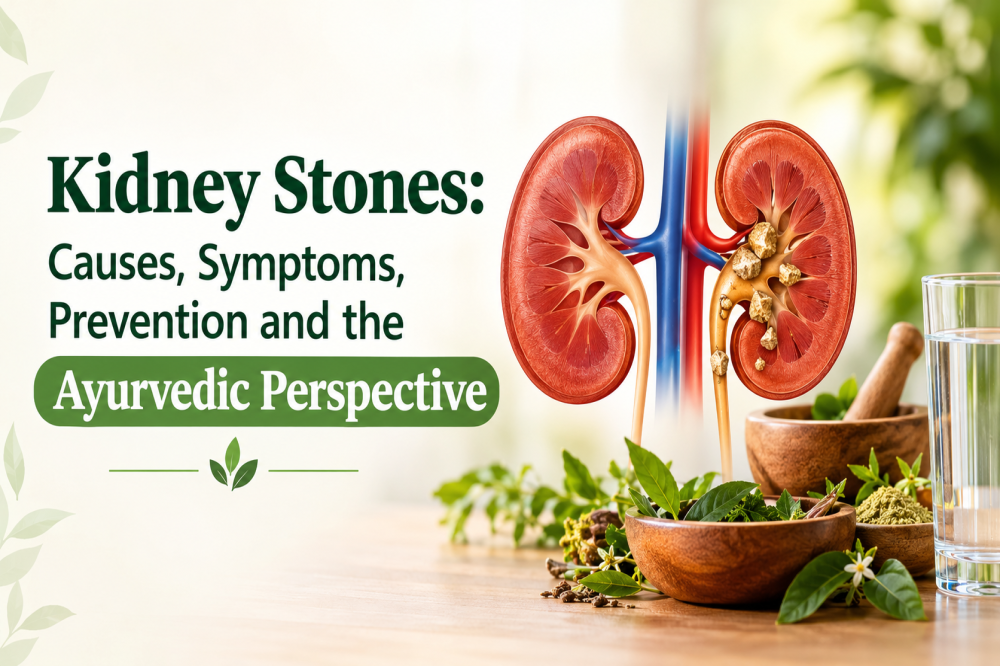


Kidney Stones: Causes, Symptoms, Prevention and the Ayurvedic Perspective
Share :
Kidney stones are hard deposits of minerals
and salts that form inside the kidneys when certain substances in urine become
concentrated and crystallise. They can range from tiny particles to larger
stones that may obstruct the urinary tract, cause severe pain and affect kidney
function.
Understanding the causes, recognising the
symptoms and seeking timely medical care are important for the effective
management and prevention of kidney stones.
What Causes Kidney Stones?
Kidney stones can develop due to several
dietary, lifestyle, genetic and medical factors. Common risk factors include:
·
Dehydration: Inadequate
fluid intake can produce concentrated urine, increasing the likelihood of stone
formation.
·
Dietary habits: Excessive
salt intake, high consumption of animal protein and certain oxalate-rich foods
may contribute to stone formation in susceptible individuals.
·
Urinary tract infections: Certain
infections can increase the risk of infection-related stones.
·
Obesity and metabolic disorders: Some metabolic conditions may increase the likelihood of developing
kidney stones.
·
Family history: Individuals
with a family history of kidney stones may have a higher risk.
·
Certain medications and medical conditions: Some medicines and underlying health conditions can affect urine
composition and increase stone risk.
Common Symptoms of Kidney Stones
Symptoms vary depending on the size and
location of the stone. Some small stones may cause no symptoms, while others
can produce significant discomfort.
·
Severe
pain in the back, side, lower abdomen or groin
·
Pain that
comes and goes in waves
·
Burning
sensation or discomfort during urination
·
Blood in
the urine (haematuria)
·
Frequent
or urgent need to urinate
·
Nausea and
vomiting
·
Fever and
chills when an infection is present
When
to seek urgent medical care. Severe or persistent
pain, fever, chills, repeated vomiting or difficulty passing urine requires
prompt medical evaluation. A kidney stone associated with urinary obstruction
and infection can become a medical emergency.
How Are Kidney Stones Diagnosed and Treated?
Diagnosis usually involves an assessment of
symptoms, medical history, urine tests, blood tests and imaging studies such as
ultrasound or CT scans when clinically indicated.
Treatment depends on the stone’s size,
location, composition, symptoms and whether it is causing an obstruction or
infection.
Some smaller stones may pass naturally with
appropriate medical supervision. Larger stones or those causing complications
may require medication, specialised procedures or urgent urological treatment.
Identifying the type of stone can also help
guide preventive dietary and lifestyle changes.
Kidney Stones in Ayurveda: Understanding Ashmari
In Ayurveda, urinary stone disorders are
traditionally discussed under Ashmari, in relation to disturbances of the
Mutravaha Srotas (urinary channels).
Classical Ayurvedic explanations describe
the involvement of the three doshas:
·
Kapha: Traditionally
associated with the accumulation and consolidation of stone-forming material.
·
Pitta: Considered in
relation to metabolic processes and associated disturbances.
·
Vata: Traditionally
associated with pain and disturbances in urinary flow.
These descriptions reflect the classical
Ayurvedic understanding of the condition and should not be interpreted as
scientifically established mechanisms of kidney stone formation.
Ayurvedic Approach to Kidney Stone Management
Ayurvedic practice traditionally focuses on
individualised assessment, dietary habits, lifestyle modification and selected
therapeutic approaches.
An Ayurvedic physician may consider factors
such as the patient’s Prakriti (constitution), symptoms, general health and
associated medical conditions.
However, suspected kidney stones must first
be evaluated appropriately to identify their size, location and any
complications. Ayurvedic therapies should not replace necessary medical
investigations, emergency treatment or urological procedures.
Classical Ayurvedic Formulations
Traditional formulations discussed in
Ayurvedic practice for urinary complaints include:
·
Chandraprabha
Vati
·
Gokshuradi
Guggulu
·
Varunadi
Kashayam
·
Punarnavadi
preparations
·
Pashanabheda-based
formulations
·
Yavakshara
and other classical preparations
These are examples from traditional
practice, not general treatment recommendations. Their suitability and safety
require individual professional assessment. Reliable clinical evidence is
insufficient to establish that these formulations consistently dissolve kidney
stones or prevent their recurrence.
Panchakarma and Supportive Therapies
Ayurvedic practice may also consider
selected procedures as part of an individualised care plan, including:
·
Snehana: Oleation therapy
·
Swedana: Sudation or therapeutic
sweating
·
Virechana: Therapeutic
purgation
·
Basti: Medicated enema
therapy
These procedures belong to traditional
Ayurvedic treatment approaches. They have not been established as effective
methods for removing kidney stones or treating urinary obstruction and must not
delay medically necessary care. Any procedure involving sweating or fluid loss
also needs an individual hydration and safety assessment.
Traditional Ayurvedic Herbs Associated with Urinary Health
Several plants have traditionally been
discussed in Ayurveda in connection with urinary health and Ashmari management.
The following names are included for educational context only; none should be
presented as a proven way to dissolve kidney stones.
Pashanabheda
(Bergenia ligulata). Pashanabheda is traditionally
associated with urinary stone disorders. Preliminary laboratory and
experimental research has explored its properties, but reliable clinical
evidence establishing its ability to dissolve kidney stones in humans is
insufficient.
Gokshura
(Tribulus terrestris). Gokshura is used in
traditional Ayurvedic practice for urinary complaints. Its potential effects on
urinary function and stone formation require further well-designed human
studies.
Varuna
(Crataeva nurvala). Varuna is traditionally
described in relation to urinary tract health. Research into its potential role
in kidney stone management remains limited.
Punarnava
(Boerhavia diffusa). Punarnava has a history of
traditional use for urinary complaints and fluid-related conditions. Its
clinical effectiveness and safety for treating kidney stones have not been
conclusively established.
Kulattha
(Macrotyloma uniflorum / horse gram). Kulattha,
commonly known as horse gram, is a food ingredient mentioned in traditional
Ayurvedic dietary practices. Evidence is insufficient to conclude that
consuming horse gram can dissolve existing kidney stones.
Shigru
(Moringa oleifera). Shigru is valued in traditional
medicine and has been investigated in experimental research. Its effectiveness
in preventing or treating kidney stones in humans remains unproven.
Important:
Herbal products should not be self-prescribed for
kidney stones. Their suitability depends on kidney function, existing medical
conditions, other medications and the quality of the preparation. Natural
products are not automatically safe or effective.
Diet and Lifestyle Tips to Help Prevent Kidney Stones
Healthy daily habits can reduce the risk of
certain types of kidney stones.
1. Stay
adequately hydrated. Drink sufficient water
throughout the day, unless your healthcare professional has advised fluid
restriction.
2. Reduce
excess salt. Limit highly salted foods and
frequently consumed processed foods.
3. Maintain
a balanced diet. Include suitable portions of
vegetables, fruits and other nutritious foods.
4. Consume
adequate dietary calcium. Do not unnecessarily
avoid calcium-rich foods, as insufficient dietary calcium can increase the risk
of some stone types.
5. Moderate
animal protein intake. Excessive consumption may
increase stone risk in susceptible individuals.
6. Maintain
a healthy body weight. Regular physical activity
and healthy eating support overall metabolic health.
7. Avoid
prolonged dehydration. Pay particular attention to
fluid intake during hot weather and physical activity.
8. Follow
individual dietary advice. Restrictions involving
oxalate, calcium or other nutrients should depend on stone type and clinical
assessment.
People who have experienced kidney stones
may benefit from stone analysis, appropriate investigations and follow-up care
to identify factors associated with recurrence.
Conclusion
Kidney stones are a common urinary tract
condition that can cause significant pain and, in some cases, serious
complications.
Timely diagnosis, appropriate medical
treatment, adequate hydration and individualised dietary changes are essential
components of management and prevention.
Ayurveda offers a traditional perspective
that emphasises individual assessment and lifestyle practices. However, the
effectiveness of specific Ayurvedic medicines, herbs and procedures for
dissolving or preventing kidney stones remains uncertain.
A responsible approach combines appropriate
medical evaluation, evidence-based preventive measures and professionally
supervised supportive care when suitable.
Article submitted by: Dr. Adhil P. T.,
Resident Medical Officer, Dr. P. Alikutty’s Ayurveda and Modern Hospital,
Kottakkal.
Medical information disclaimer: This article
is for general health awareness and does not replace an individual
consultation, diagnosis or treatment by a qualified healthcare professional.


